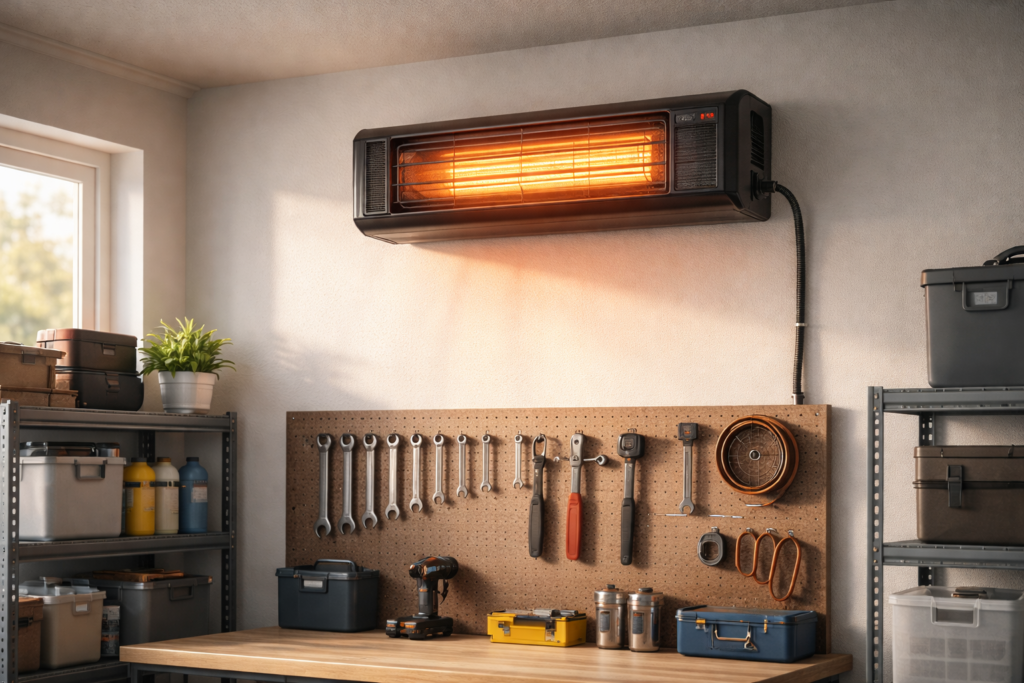
Electric garage heaters are generally safe when they are properly installed, correctly sized, and used according to manufacturer instructions.
In most garages, problems happen when heaters are overloaded, poorly installed, or placed too close to flammable materials. When used correctly, electric heaters are considered one of the safer heating options because they do not rely on open flames, combustion gases, or fuel storage.
This guide explains where the real risks are — and how to avoid them.
Quick Safety Overview
Electric garage heaters are safe because they do not burn fuel, but they still require proper electrical setup and safe placement.
- No carbon monoxide or combustion fumes
- No fuel storage or gas leaks
- Lower fire risk compared to open-flame heaters
- Still require proper clearance and wiring
Why Electric Garage Heaters Are Considered Safe
Electric heaters produce heat using internal heating elements powered by electricity. There is no combustion process involved.
This means:
- No carbon monoxide
- No exhaust gases
- No fuel leaks
- No pilot lights
Compared to gas or propane systems, electric heaters remove many of the risks associated with ventilation and fuel handling. This is one reason they are commonly used in attached garages.
If you are still comparing heater types, see Types of Electric Garage Heaters Explained.
The Real Safety Risks (And How to Prevent Them)
In most homes, safety issues are not caused by the heater itself, but by how it is installed or used.
Electrical Overload
Plug-in 120V heaters can draw significant current. A common issue is plugging them into overloaded circuits or using extension cords that are not rated for the load.
To prevent this:
- Plug heaters directly into a wall outlet
- Avoid extension cords whenever possible
- Use a dedicated circuit for larger units
- Check the wattage rating before use
If you are unsure about power requirements, see 120V vs 240V Electric Garage Heaters.
Improper Clearance
Heaters must have sufficient space around them to operate safely.
Placing heaters too close to items like gas cans, paint, cardboard boxes, or sawdust can create a fire risk.
Always follow the clearance distances listed in the manufacturer’s instructions. In most garages, wall-mounted or ceiling-mounted heaters reduce this risk by keeping heat sources away from clutter.
Incorrect Installation (240V Units)
Hardwired 240V heaters require proper electrical installation. Incorrect wiring can lead to overheating, breaker issues, or long-term electrical damage.
For larger heaters, a dedicated circuit is usually required. If the heater is undersized or oversized for your setup, it can also create unnecessary strain on the system.
To avoid this, see What Size Electric Heater Do I Need for My Garage before selecting a unit.
When in doubt, installation should be handled by a licensed electrician.
Lack of Safety Features
Most modern electric garage heaters include built-in safety features that reduce risk.
- Overheat protection
- Automatic shutoff
- Thermostatic control
- Tip-over protection (portable units)
Choosing a heater with these features is one of the simplest ways to improve safety.
Are Electric Heaters Safe in Attached Garages?
Yes — and this is one of the main advantages of electric heating.
Because there is no combustion, electric heaters do not produce exhaust gases that could enter your home. This makes them a safer option for attached garages compared to gas heaters.
However, safe operation still depends on correct installation, proper electrical supply, and maintaining clearance around the heater.
Are Electric Garage Heaters Safe to Leave On Unattended?
This depends on the type of heater and how it is installed.
Wall-mounted and ceiling-mounted heaters with thermostats and overheat protection are generally designed for longer operation.
Portable heaters are better suited for supervised use.
As a general guideline:
- Avoid running portable heaters overnight
- Keep flammable materials well clear
- Install smoke detectors in attached garages
When Electric Garage Heaters Become Unsafe
Electric heaters become risky when basic safety guidelines are ignored.
- Circuits are overloaded
- Extension cords are used improperly
- Heaters are blocked or covered
- Dust buildup is not cleaned
- The heater is undersized and runs continuously at maximum output
In many cases, choosing the correct heater size reduces strain and improves overall safety.
Choosing a Safe Heater for Your Garage
Safety starts with selecting the right type of heater for your space.
For example, small garages may work with portable units, while larger garages benefit from mounted heaters with dedicated circuits.
You can explore suitable options in Best Electric Garage Heaters and Best Electric Heater for Small Garages.
Quick Safety Checklist
- Correct heater size for your garage
- Proper electrical supply and circuit capacity
- Clearance from flammable materials
- Appropriate mounting type
- Built-in safety features
Bottom Line
Electric garage heaters are safe for residential use when installed correctly, sized properly, and used according to manufacturer guidelines.
They avoid many of the risks associated with gas heating and are one of the simplest ways to heat a garage or workshop.
The key is not just choosing a heater, but choosing one that matches your space, electrical setup, and usage.
If you are still deciding, start with How to Choose an Electric Garage Heater to match heater type to your garage layout and power supply.