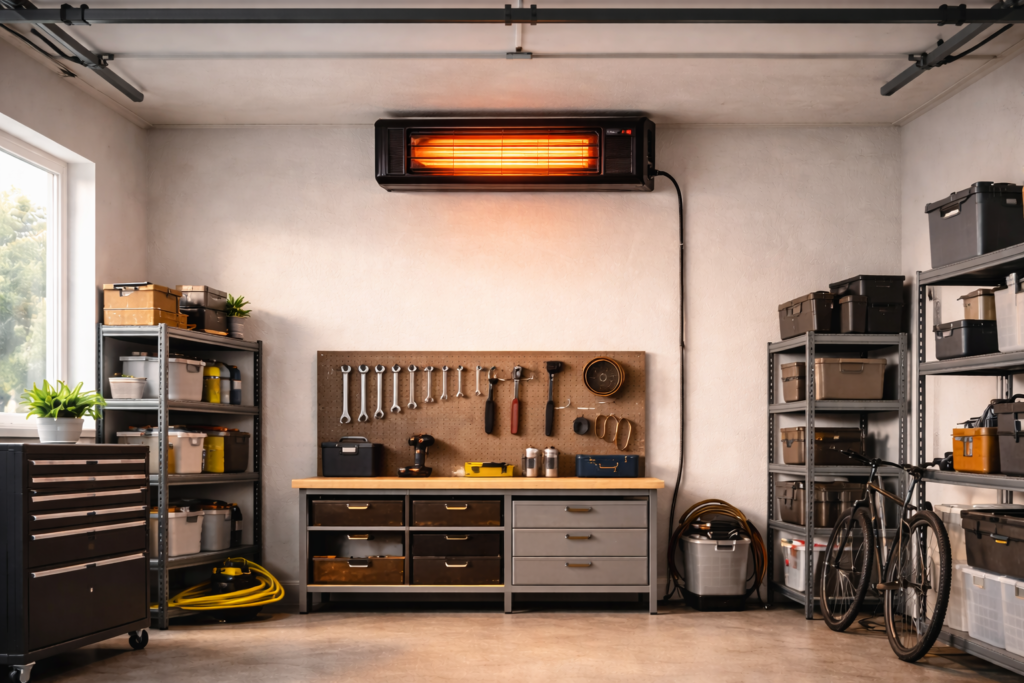
Proper clearance is one of the most important safety factors when installing an electric garage heater.
Clearance refers to the minimum safe distance between the heater and nearby objects such as walls, ceilings, shelves, vehicles, and stored materials.
Even though electric heaters do not use open flames, they still generate high surface temperatures. Without adequate spacing, nearby materials can overheat or ignite over time.
Always follow the manufacturer’s listed clearance specifications first. The guidelines below are general reference points.
Typical Clearance Guidelines
While exact numbers vary by model, many electric garage heaters require:
• 12–36 inches from the ceiling
• 6–24 inches from side walls
• 3–6 feet from the floor (for wall-mounted units)
• 3 feet minimum from flammable materials
Portable heaters often require at least 3 feet of clearance in all directions.
Check the installation manual before mounting any unit.
Clearance for Wall-Mounted Heaters
Wall-mounted heaters are usually installed:
• At least 6 feet above the floor
• Several inches away from adjacent walls
• With clear airflow in front of the unit
They should not be installed directly above:
• Gasoline storage
• Paint cans
• Cardboard boxes
• Wood shavings or sawdust
The heated air must move freely across the room. Blocking the front of the unit reduces efficiency and increases heat buildup.
If you’re planning placement, review Where Should You Place a Garage Heater? before installation.
Clearance for Ceiling-Mounted Heaters
Ceiling units often require:
• 12–36 inches below the ceiling surface
• Clear space below the heater
• No shelving or obstructions directly underneath
Because heat rises, proper fan-forced airflow is important to push warm air downward.
In garages with high ceilings, placement and wattage must work together. If you’re unsure about heater capacity, see How Many Watts to Heat a Garage? to avoid undersizing.
Clearance for Portable Heaters
Portable electric garage heaters require the most attention because they sit closer to stored materials.
Best practices:
• Place on flat, non-flammable surfaces
• Keep at least 3 feet from walls or objects
• Avoid tight corners
• Never place on rugs or cardboard
Do not use portable heaters near:
• Fuel containers
• Solvents
• Aerosol cans
Portable units should also never be covered or used to dry clothing.
Why Clearance Matters
Insufficient clearance can cause:
• Overheated surfaces
• Damaged wiring
• Reduced airflow
• Increased fire risk
Electric heaters include overheat protection, but safety systems should not replace proper installation practices.
Maintaining correct spacing ensures:
• Even heat distribution
• Longer heater lifespan
• Safer operation
For a full breakdown of safety risks and how to avoid them, see Are Electric Garage Heaters Safe.
Special Considerations for Attached Garages
Attached garages require extra care because:
• Heat can transfer through shared walls
• Stored materials may be closer together
• Electrical load impacts the main panel
Always verify that installation meets local electrical code requirements.
If your heater requires hardwiring, confirm electrical capacity before mounting. You can review circuit considerations in Do You Need a Dedicated Circuit for a Garage Heater?
Bottom Line
Clearance requirements vary by model, but general safety rules include:
• Maintain at least 3 feet from flammable materials
• Follow ceiling and wall spacing guidelines
• Never block airflow
• Always check the manufacturer’s manual
Proper clearance protects your garage, improves efficiency, and reduces long-term risk.
Take measurements before mounting — not after.