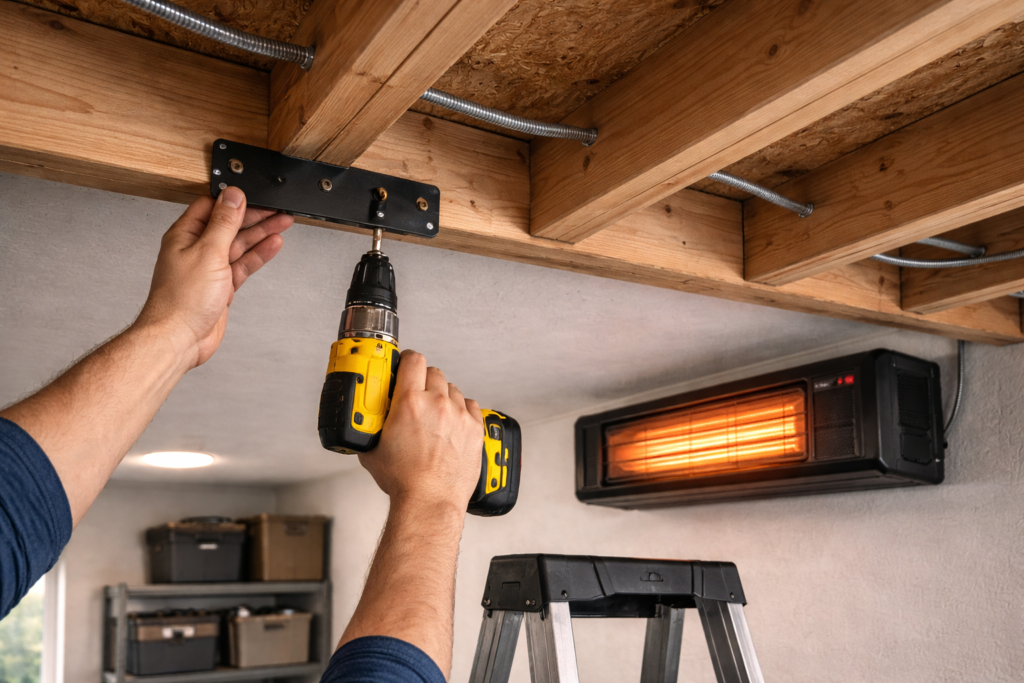
Mounting a ceiling garage heater properly improves heat distribution, frees up wall space, and keeps the unit safely out of the way.
Most ceiling-mounted electric garage heaters are designed for permanent installation and often require a 240V dedicated circuit. Always follow the manufacturer’s instructions first. The steps below provide a general overview of the process.
Step 1: Confirm Electrical Requirements
Before mounting anything, verify:
• Voltage (120V or 240V)
• Wattage
• Breaker size
• Wiring gauge
Most ceiling units above 4,000 watts require a 240V dedicated circuit. If you are unsure whether your panel can support it, review Do You Need a Dedicated Circuit for a Garage Heater? before proceeding.
If electrical work is required, hire a licensed electrician.
Step 2: Choose the Right Location
Ceiling heaters work best when installed:
• Near the center of the garage
• Slightly toward the garage door
• At least 8 feet above the floor (if possible)
• With proper clearance from walls and stored items
Avoid mounting directly above:
• Shelving units
• Vehicle roofs (too close to airflow path)
• Flammable storage areas
Correct placement improves circulation. For layout planning, see Where Should You Place a Garage Heater?
Step 3: Locate Ceiling Joists
The heater must be secured directly into structural framing.
Use a stud finder to locate ceiling joists.
Never mount a heater into drywall alone.
Most units include a mounting bracket that attaches to:
• Wood joists
• A support beam
• A reinforced mounting board
If joists are not ideally positioned, you may need to install a cross brace between them.
Step 4: Install the Mounting Bracket
Attach the manufacturer-provided bracket securely using:
• Lag bolts (for wood framing)
• Appropriate hardware rated for the heater’s weight
Make sure:
• The bracket is level
• All bolts are tightened fully
• The structure can support vibration
Ceiling heaters are heavier than wall units, so stability is critical.
Step 5: Attach and Angle the Heater
Once the bracket is secured:
• Lift the heater into position
• Bolt it to the mounting bracket
• Adjust the angle downward slightly
Angling the unit helps push warm air toward the floor before it rises.
Proper airflow direction reduces cold spots and improves efficiency.
If you’re unsure whether the heater is powerful enough for your ceiling height, review How Many Watts to Heat a Garage? before finalizing installation.
Step 6: Complete Electrical Connection
Depending on the unit:
• Plug into a rated ceiling outlet (rare for larger models)
• Hardwire directly into a junction box
All wiring should comply with local electrical code.
Never:
• Use extension cords
• Undersize wiring
• Share a circuit that exceeds capacity
Once wired, restore power and test operation.
For a full breakdown of safety risks and how to avoid them, see Are Electric Garage Heaters Safe.
Step 7: Verify Clearance and Airflow
After installation:
• Confirm required clearance from ceiling and walls
• Ensure nothing blocks the heater’s front
• Check that airflow reaches the working area
Proper clearance prevents overheating and improves long-term safety.
Bottom Line
Mounting a ceiling garage heater involves:
• Confirming electrical capacity
• Securing into structural framing
• Following clearance guidelines
• Angling airflow properly
For most 240V installations, professional electrical work is recommended.
A properly mounted ceiling heater provides efficient, even heating while keeping your garage floor and walls clear.