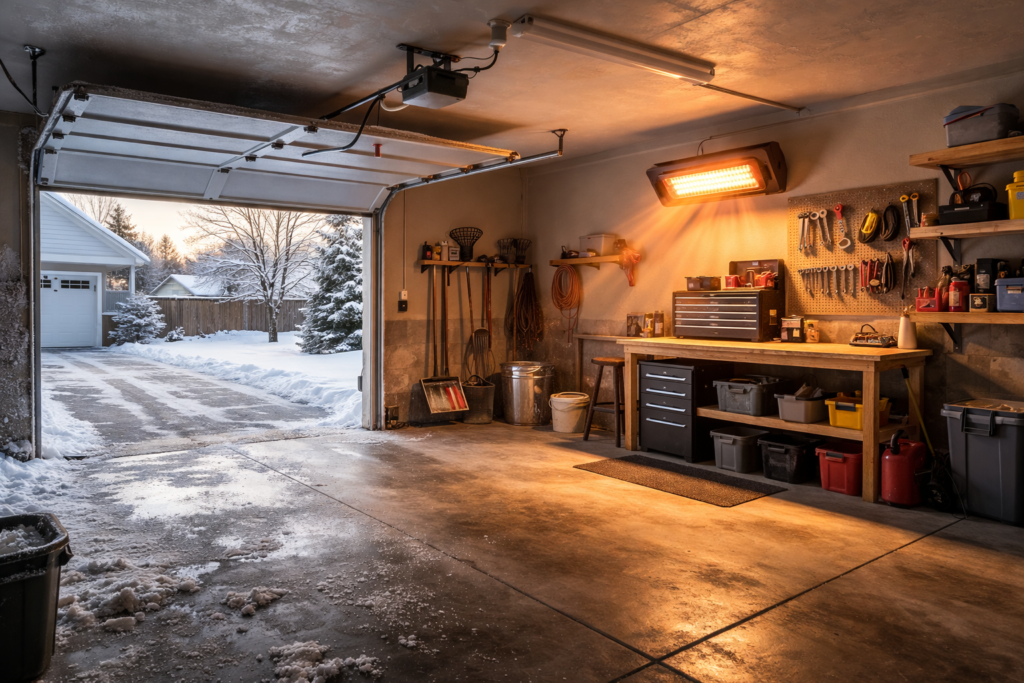
Most garages take 20 to 60 minutes to warm up with a properly sized electric heater. Smaller insulated garages may heat in 20–30 minutes, while larger or poorly insulated garages may take 45–60 minutes or longer depending on heater size and outdoor temperatures.
The exact warm-up time depends mainly on the heater’s wattage, the size of the garage, and how well the space is insulated.
The Biggest Factors That Affect Warm-Up Time
Four main variables determine how quickly your garage heats up:
• Heater wattage
• Garage square footage
• Insulation level
• Outdoor temperature
If the heater is too small for the space, it may run continuously without ever reaching the desired temperature.
Before estimating heat-up time, make sure your unit is correctly sized using How Many Watts to Heat a Garage?
Heater Size for Different Garage Types
Heating time depends heavily on heater size and garage insulation. These guides explain typical heater sizes for different garage setups.
What Size Electric Heater for a 400 sq ft Garage
What Size Electric Heater for a 2 Car Garage
What Size Electric Heater for a 500 sq ft Garage
What Size Heater for an Uninsulated Garage
Typical Warm-Up Estimates
Here’s what you can generally expect:
Small insulated one-car garage (1,500–2,500W)
→ 20–30 minutes
Two-car insulated garage (4,000–5,000W)
→ 30–45 minutes
Large or uninsulated garage
→ 45–60+ minutes
Extremely cold outdoor temperatures can extend these times significantly.
If your garage takes a long time to heat, the issue may be the heater itself. This guide looks at the best heaters for colder conditions:
Best Electric Garage Heater for Cold Climates
Why Insulation Changes Everything
Insulation reduces heat loss through:
• Walls
• Garage doors
• Ceiling
• Gaps and cracks
In an uninsulated garage:
• Cold surfaces absorb heat first
• Warm air escapes quickly
• The heater runs longer
If your garage is unfinished, review Heating an Uninsulated Garage: What to Expect to understand realistic performance expectations.
120V vs 240V Warm-Up Differences
A 1,500W 120V heater can only produce a limited amount of heat.
In larger garages, it may:
• Take much longer to warm up
• Only heat a small area
• Struggle in freezing temperatures
Higher-wattage 240V heaters deliver more heat output, which reduces warm-up time in medium to large spaces.
If you’re unsure about voltage options, see 120V vs 240V Electric Garage Heaters before upgrading.
Ceiling Height and Air Volume
Warm air rises.
Garages with:
• 10-foot ceilings
• Open rafters
• Loft storage
contain more air volume to heat.
Higher ceilings increase warm-up time unless:
• The heater has strong fan circulation
• The unit is angled downward
• Wattage is increased accordingly
For a full breakdown of how to calculate the correct heater size based on garage size, insulation, and ceiling height, see What Size Electric Heater Do I Need for My Garage.
Thermostat Cycling
Once the garage reaches your set temperature, the heater cycles on and off to maintain it.
The first warm-up takes the longest. After that:
• Maintaining temperature requires less energy
• Cycling is shorter and more efficient
Starting the heater 20–30 minutes before working in the garage is often enough in insulated spaces.
Heating time depends heavily on heater size and output. To match your space with the right unit, see the best electric garage heaters by garage size.
Can You Speed Up Warm-Up Time?
Yes, by:
• Improving insulation
• Sealing air gaps
• Choosing proper wattage
• Using a fan-forced heater
• Keeping the garage door closed
If warm-up time feels excessive, it may indicate the heater is undersized.
If your garage is taking longer than expected to warm up, see electric garage heater not heating enough for common causes and practical fixes
Bottom Line
Heating a garage usually takes between 20 and 60 minutes.
Faster results depend on:
• Proper heater sizing
• Good insulation
• Adequate wattage
• Effective air circulation
The better the insulation and the stronger the heater (within safe electrical limits), the quicker your garage will reach a comfortable working temperature.
If your garage takes too long to warm up, the issue may be insufficient heating capacity. This guide covers better options for larger spaces:
Best Electric Garage Heater for Large Garages