All electric garage heaters are nearly 100% efficient at converting electricity into heat. The difference in “energy efficiency” usually comes down to how well the heater matches your garage size and how effectively it controls runtime.
The most energy efficient electric garage heater is one that:
• Is properly sized
• Includes thermostat control
• Matches your insulation level
• Uses the right heating style for your space
Efficiency is more about setup and control than brand name.
Electric Heaters Are Nearly 100% Efficient
Unlike gas heaters, electric heaters:
• Do not lose heat through venting
• Do not burn fuel
• Convert almost all input electricity into heat
That means the real efficiency question is:
How much energy do you need to maintain comfort?
Proper Sizing Is the Biggest Factor
An undersized heater:
• Runs continuously
• Struggles to reach temperature
• Uses more electricity over time
An oversized heater:
• Short cycles frequently
• May draw unnecessary electrical load
The most efficient setup is balanced sizing.
Before selecting a unit, confirm your needs with What Size Electric Heater Do I Need for My Garage?
Infrared vs Fan-Forced Efficiency
Both styles are electrically efficient, but they behave differently.
Infrared heaters:
• Warm objects directly
• Feel comfortable at lower air temperatures
• Can reduce overall runtime in drafty garages
Fan-forced heaters:
• Heat the entire air mass
• Provide consistent thermostat control
• Work best in insulated spaces
If your garage is uninsulated, infrared may feel more efficient because it is less affected by air loss.
To understand heater types more clearly, review Types of Electric Garage Heaters Explained.
Thermostat and Efficiency
A heater without a thermostat runs manually and can waste energy.
An efficient setup includes:
• Built-in thermostat
• Adjustable temperature control
• Automatic cycling
Thermostat control reduces unnecessary runtime and improves comfort.
Insulation Improves Efficiency More Than Heater Type
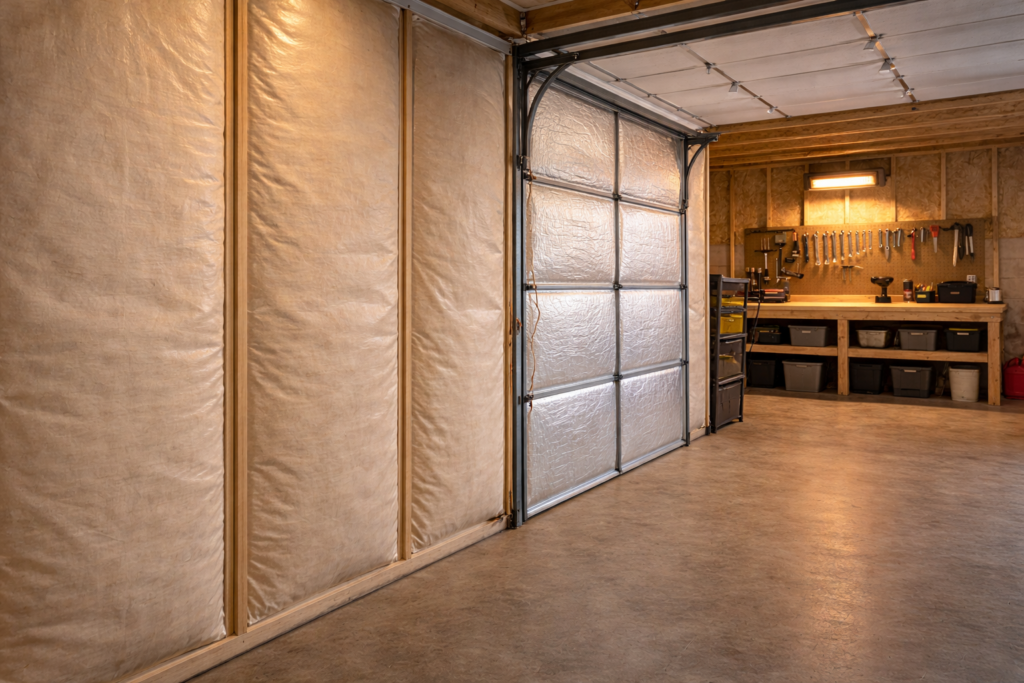
No heater is efficient in a poorly insulated garage.
Improving insulation in:
• Walls
• Ceiling
• Garage door panels
• Air gaps
can significantly reduce energy use.
In many cases, adding insulation saves more energy than upgrading heater wattage.
Voltage Does Not Determine Efficiency
There is a common misconception that 240V heaters are more efficient than 120V heaters.
Efficiency depends on wattage, not voltage.
A 5,000-watt heater costs the same to operate whether powered by 240V or an equivalent 120V system.
If you’re comparing electrical setups, review 120V vs 240V Electric Garage Heaters for clarification.
What Makes the Most Energy Efficient Setup?
The most energy efficient electric garage heating setup:
• Matches square footage accurately
• Includes thermostat control
• Uses appropriate wattage
• Is installed with proper airflow
• Operates in an insulated space
Balanced sizing and proper control reduce wasted energy.
If you’re focusing on efficiency, comparing different models can help you choose the right option. This guide reviews practical choices:
Electric Garage Heater Reviews
Bottom Line
All electric garage heaters convert electricity to heat efficiently.
If you’re trying to heat a smaller garage efficiently, choosing the right type of heater matters. This guide covers the best options:
Best Electric Garage Heater for Small Garages
The most energy efficient option is:
• Properly sized
• Thermostat-controlled
• Matched to insulation level
Improving insulation and choosing correct wattage usually have a bigger impact than selecting between heater brands.