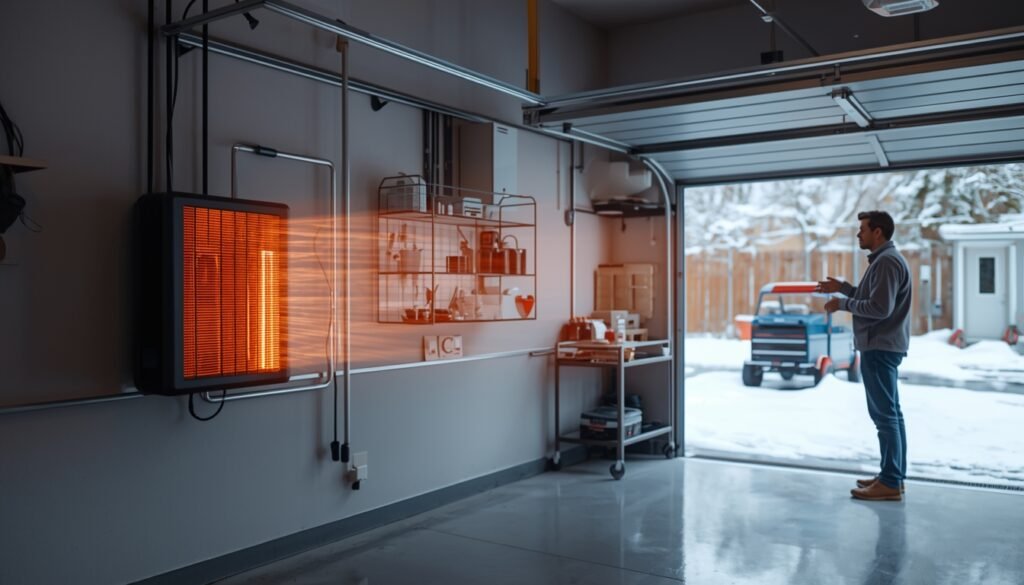
In most homes, an electric garage heater is expected to make the space comfortable within a reasonable amount of time. A common issue is that the heater is running, but the garage still feels cold or only slightly warmer than outside. Many people find this confusing because the unit appears to be working, yet the results don’t match expectations.
This typically happens when the heater, the space, and the setup are not properly aligned. Before assuming the heater is faulty, it helps to understand how garage heating actually works and what can limit performance. If you are unsure whether your setup is correct, it’s worth reviewing a full guide to choosing an electric garage heater to confirm that your unit matches your space.
Signs Your Garage Heater Isn’t Heating Enough
- The heater runs continuously but the garage temperature barely rises
- You feel warmth close to the unit but not across the entire space
- The garage cools down quickly once the heater turns off
- The heater cycles on and off without noticeably improving comfort
- It takes an unusually long time to feel any warmth at all
These signs usually point to performance limitations rather than a complete failure. In many cases, the heater is doing exactly what it can, but something is preventing it from being effective.
Why This Happens in Real Homes
In most homes, garages are very different from indoor living spaces. They are often uninsulated, have large doors, and are exposed to outside air. A common issue is expecting a garage heater to behave like a home heating system, when in reality it is working in a much harsher environment.
Many people find that even a good heater struggles if heat is constantly escaping. This typically happens when cold air enters through gaps, or when walls and ceilings allow heat to dissipate quickly. As a result, the heater is always trying to “catch up” rather than maintaining a stable temperature.
For a full breakdown of how to calculate the correct heater size based on garage size, insulation, and ceiling height, see What Size Electric Heater Do I Need for My Garage.
The Most Common Causes and Fixes
Heater Is Too Small for the Garage
This is one of the most frequent reasons for poor heating performance. In most homes, garages require more heating power than expected because of heat loss and larger open spaces.
A common issue is using a small portable heater in a medium or large garage. Many people find that while the unit produces heat, it simply doesn’t have enough output to warm the entire area.
This typically happens when the heater’s wattage is below what the space requires. The result is a heater that runs constantly but never reaches a comfortable temperature.
The practical fix is to check the heater’s wattage against your garage size. If the numbers don’t match, upgrading to a higher-capacity unit will make the biggest difference.
If your current heater isn’t keeping up in a larger garage, you may need a higher-output unit. This guide explains the best options:
Best Electric Garage Heater for Large Garages
Heat Loss Through Poor Insulation
In most homes, garages are not insulated to the same standard as the rest of the house. A common issue is that heat escapes almost as quickly as it is produced.
Many people find that even a powerful heater struggles when insulation is missing or minimal. This typically happens when walls, ceilings, or garage doors allow heat to leak out continuously.
Improving insulation—even partially—can dramatically improve heating performance. Sealing gaps, adding insulation panels, or upgrading door seals can help retain warmth and reduce the workload on the heater.
Incorrect Heater Placement
Where the heater is located plays a bigger role than many people expect. In most homes, heaters are installed wherever there is space, rather than where airflow is most effective.
A common issue is placing the heater where heat cannot circulate properly. Many people find that heat builds up near the ceiling or in one corner while the rest of the garage remains cold.
This typically happens when the heater is blocked, aimed incorrectly, or positioned too high without proper airflow. Adjusting placement so that warm air can move freely across the space often improves results without changing the heater itself.
Electrical Supply Limitations
Electric heaters rely on consistent power to perform properly. A common issue is that the heater is not receiving enough electrical capacity to operate at full output.
Many people find this happens when a high-powered heater is plugged into a standard outlet or shared circuit. This typically results in reduced performance or frequent cycling.
Ensuring the heater is connected to the correct voltage and circuit is essential. If needed, upgrading to a dedicated circuit can significantly improve performance.
Cold Starting Conditions
In many garages, temperatures can drop very low, especially overnight or during winter. A common issue is expecting the heater to quickly warm a very cold space.
Many people find that electric heaters are better at maintaining warmth than rapidly heating a freezing environment. This typically happens when the heater is turned on only after the garage has become extremely cold.
Allowing more time for the heater to work, or maintaining a baseline temperature, can make a noticeable difference.
Air Leaks and Drafts
Even small drafts can reduce heating efficiency. In most homes, garages have gaps around doors, windows, or structural joints that allow cold air to enter.
A common issue is that these drafts constantly replace warm air with cold air. Many people find that sealing these gaps leads to an immediate improvement in how warm the garage feels.
Quick Checks You Can Do Right Away
- Confirm the heater’s wattage matches your garage size
- Check for gaps around doors and seal any obvious drafts
- Ensure the heater is not blocked and has clear airflow
- Verify the power supply meets the heater’s requirements
- Allow enough time for the heater to warm the space fully
These simple checks often resolve the issue without needing to replace the heater.
When the Heater Might Be the Problem
While most issues are related to setup or environment, the heater itself can sometimes be at fault. In most homes, this is less common but still possible.
A common issue is internal component wear or failure. Many people find this becomes noticeable when the heater produces little to no heat despite running normally.
This typically happens when heating elements degrade or internal controls malfunction. If you notice unusual noises, no heat output, or inconsistent operation, the unit may need repair or replacement.
Final Thoughts
In most homes, an electric garage heater that isn’t heating enough is not broken—it’s limited by conditions around it. A common issue is a mismatch between heater capacity, garage size, and heat retention.
Many people find that improving insulation, correcting placement, and ensuring proper power supply solves the problem without needing a new heater. This typically leads to better performance and a more comfortable space.
By focusing on the basics—power, placement, and heat retention—you can get far more effective results from your existing setup.
If your garage still struggles to stay warm, especially in colder conditions, this guide breaks down the best heater options for freezing temperatures:
Best Electric Garage Heater for Cold Climates