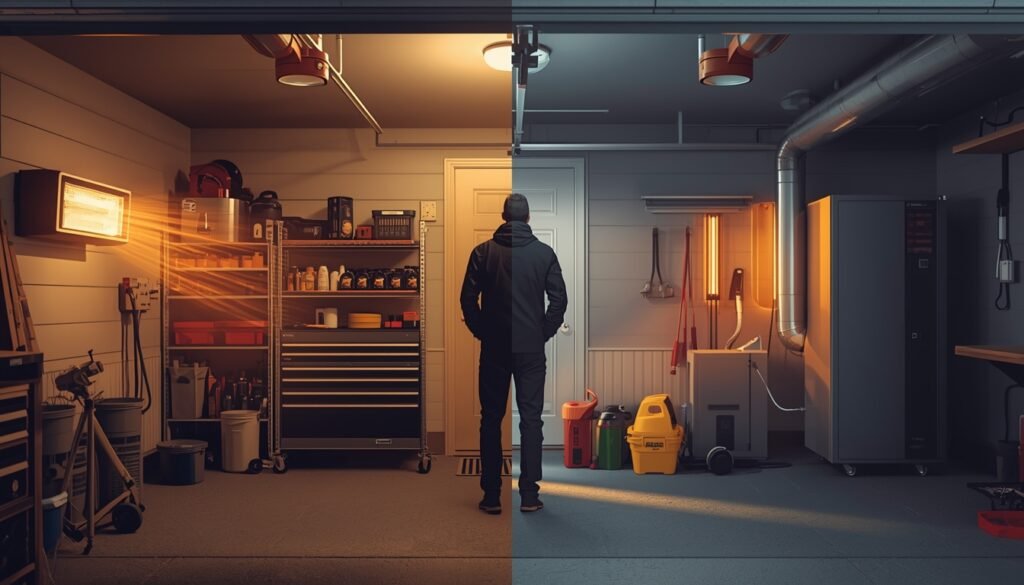
In most homes, choosing how to heat a garage comes down to two main options: electric heaters and gas heaters. A common issue is that many people are unsure which one is actually better for their situation. Both can heat a garage effectively, but they work in very different ways and suit different types of spaces.
Many people find that the decision becomes clearer once they understand how each type performs in real-world conditions. This typically happens when you compare not just heating power, but also installation, safety, running costs, and how the heater is used day to day. If you are still deciding on the right setup, it can help to review a full guide to choosing an electric garage heater to see how electric systems fit into different garage types.
How Electric Garage Heaters Work
In most homes, electric garage heaters are the simplest option. They generate heat using electrical elements, either blowing warm air into the space or radiating heat directly onto objects.
A common issue is assuming electric heaters are weak, but many people find they are more than capable when matched correctly to the space. This typically happens when the heater is properly sized and the garage is reasonably enclosed.
Electric heaters are generally:
- Easy to install
- Clean to operate
- Low maintenance
Because they do not rely on combustion, they are often preferred for enclosed or attached garages where safety is a priority.
How Gas Garage Heaters Work
Gas heaters use natural gas or propane to produce heat through combustion. In most homes, these are used when more heating power is needed, especially in larger garages or colder climates.
A common issue is that gas heaters require more setup and planning. Many people find that installation involves ventilation, fuel supply, and sometimes professional assistance.
This typically happens because gas heaters produce exhaust gases that must be safely removed from the space. While they are powerful, they also introduce more complexity compared to electric systems.
Heating Performance in Real Conditions
In most homes, gas heaters provide faster and stronger heat output. A common issue is expecting an electric heater to match that performance in a cold, uninsulated garage.
Many people find that gas heaters are better at rapidly heating a very cold space. This typically happens because they can generate higher levels of heat more quickly.
Electric heaters, on the other hand, are better suited to maintaining a steady temperature rather than rapidly heating freezing conditions. When used correctly, they can still provide comfortable warmth for everyday use.
Installation and Setup Differences
Electric heaters are much easier to install. In most homes, they can be plugged in or hardwired with minimal effort.
A common issue with gas heaters is the complexity of installation. Many people find that they need to consider gas lines, ventilation systems, and proper clearances.
This typically adds both time and cost before the heater is ready to use. For many homeowners, this alone makes electric heaters the more practical option.
Safety Considerations
Safety is one of the biggest differences between the two systems.
In most homes, electric heaters are considered safer because they do not produce fumes or require ventilation. A common issue with gas heaters is the risk of carbon monoxide if the system is not installed or maintained correctly.
Many people find that electric heaters provide greater peace of mind, especially in garages attached to the home. This typically makes them the preferred option where safety is a top concern.
Running Costs and Efficiency
Running costs depend on how often the heater is used and how well the garage retains heat.
In most homes, electric heaters are simple but can cost more to run over long periods. Gas heaters are often cheaper to operate for large spaces or frequent use.
A common issue is focusing only on the heater type rather than the environment. Many people find that insulation and sealing drafts have a bigger impact on costs than whether the heater is electric or gas.
If you are still deciding which heater type is best for your setup, this guide explains the key factors clearly: How to Choose an Electric Garage Heater.
When Electric Heaters Are the Better Choice
- Small to medium garages that don’t require extreme heat output
- Attached garages where safety and ventilation are important
- Homeowners who want quick and simple installation
- Spaces used occasionally rather than all day
- Situations where low maintenance is preferred
In most homes, electric heaters are the better choice for convenience and ease of use. Many people find they provide enough heat without the added complexity of gas systems.
If you’re leaning toward electric heating for colder conditions, this guide covers the best-performing options:
Best Electric Garage Heater for Cold Climates
When Gas Heaters Make More Sense
- Large garages or workshop spaces
- Very cold climates where rapid heating is needed
- Detached garages where ventilation is easier
- Frequent or long-duration use
- Situations where higher heat output is essential
Gas heaters are often the better choice when performance is the priority. In most homes with larger or more demanding spaces, many people find that gas provides the power needed to maintain comfortable temperatures.
Making the Right Choice for Your Garage
In most homes, the decision comes down to balancing simplicity against performance.
A common issue is overestimating how much heating power is actually needed. Many people find that once insulation and placement are improved, an electric heater performs better than expected.
This typically leads to a simpler setup that is easier to manage and maintain. However, if your garage is large, very cold, or used as a full workshop, a gas heater may be the better option.
Quick Comparison You Can Use Right Away
- Electric heaters are easier to install and safer for enclosed spaces
- Gas heaters provide stronger and faster heat output
- Electric heaters require less maintenance over time
- Gas heaters are better suited for large or frequently used garages
- Insulation and setup matter just as much as the heater type
These simple comparisons often make the decision clearer without needing to overthink the details.
If you’re considering an electric heater for colder conditions, this guide breaks down the best options based on garage size and heating needs:
Best Electric Garage Heater for Cold Climates
Final Thoughts
Choosing between an electric garage heater and a gas heater is not about which one is universally better. It is about which one fits your garage, your usage, and your expectations.
In most homes, electric heaters offer the best balance of safety, simplicity, and ease of installation. A common issue is overlooking how much these factors matter in everyday use.
Many people find that once the basics are handled—proper sizing, good insulation, and correct placement—an electric heater performs more than well enough for most situations.
This typically makes electric heating the preferred choice for homeowners who want a reliable, low-maintenance solution without added complexity.