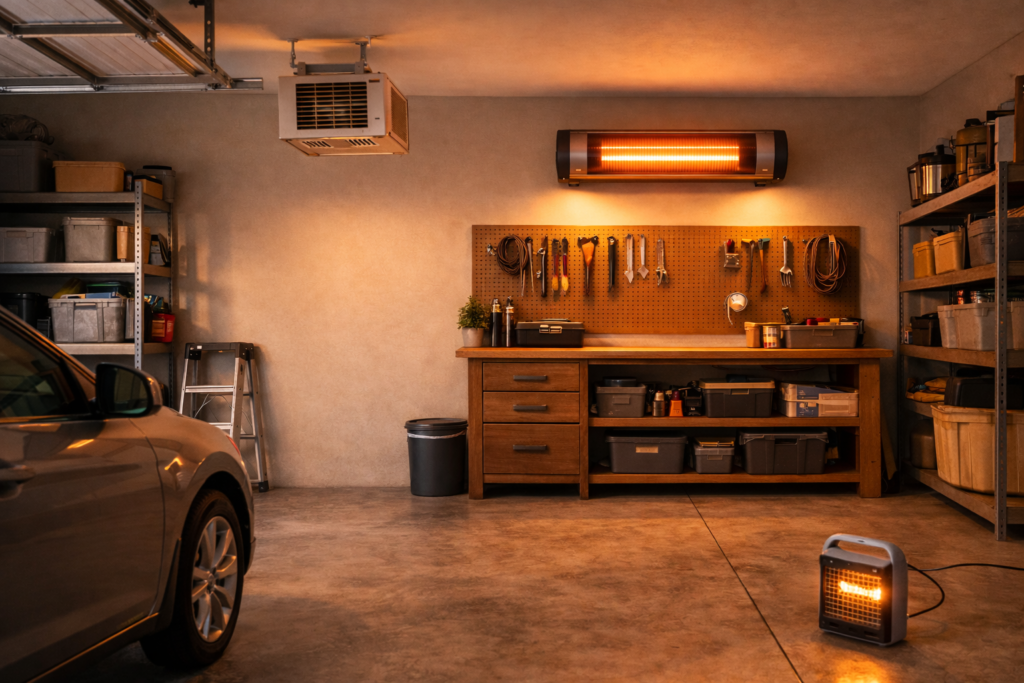
Electric garage heaters come in several different designs. While they all use electricity to generate heat, the way they deliver that heat into the space can vary significantly.
Understanding the different types helps you choose a heater that matches your garage size, layout, and how you actually use the space.
This guide explains the main types of electric garage heaters and where each one works best.
Fan-Forced Electric Heaters
Fan-forced heaters use an internal heating element combined with a fan that pushes warm air into the room.
How They Work
-
Electricity heats internal coils.
-
A fan blows air across the heating element.
-
Warm air circulates throughout the garage.
Best For
-
Heating entire garages
-
One-car and two-car spaces
-
Workshops where consistent air temperature matters
Advantages
-
Heats air evenly
-
Good for larger spaces
-
Often available in higher wattages (4,000–7,500 watts)
Considerations
-
Produces some fan noise
-
May stir up dust in workshop environments
Fan-forced heaters are the most common type used in residential garages.
If you are still choosing between voltage options, see 120V vs 240V Electric Garage Heaters to understand power limitations.
Infrared (Radiant) Electric Heaters
Infrared heaters warm objects and people directly rather than heating the air first.
How They Work
-
Emit infrared radiation
-
Heat surfaces, tools, floors, and people directly
-
Objects then gradually warm the surrounding air
Best For
-
Spot heating
-
Workbench areas
-
Garages with high ceilings
-
Drafty or partially insulated spaces
Advantages
-
Feels warm quickly
-
Less affected by air movement
-
Quiet operation (often no fan)
Considerations
-
Does not heat the entire air volume as quickly
-
Best performance when aimed at the working area
Infrared heaters are useful when you want to warm a specific area rather than the entire garage.
If you are still deciding which heater type is best for your setup, this guide explains the key factors clearly: How to Choose an Electric Garage Heater.
Ceiling-Mounted Electric Heaters
Ceiling-mounted heaters are installed overhead, often in the center of the garage.
They can be either fan-forced or infrared.
Best For
-
Garages with limited wall space
-
Workshops with tool storage on walls
-
Keeping floors and walls clear
Advantages
-
Saves usable space
-
Distributes heat downward
-
Reduces clutter
Considerations
-
Requires secure mounting
-
May require professional installation
-
Proper clearance must be maintained
Ceiling units are common in larger garages where floor space is valuable.
Once you understand the different heater types, the next step is choosing a model that fits your space. This guide to the best electric garage heaters compares practical options.
Wall-Mounted Electric Heaters
Wall-mounted heaters are fixed to one wall and blow or radiate heat outward.
Best For
-
Small to mid-size garages
-
Permanent heating setups
-
Dedicated workspaces
Advantages
-
Frees floor space
-
More permanent solution
-
Often higher output than portable units
Considerations
-
Installation required
-
Must follow clearance requirements
Wall-mounted heaters provide a balance between convenience and heating power.
If you are comparing heating styles, this guide explains the differences clearly: Infrared vs Fan-Forced Garage Heaters.
Portable Electric Garage Heaters
Portable heaters are plug-in units that sit on the floor or a bench.
Most operate on 120V circuits.
Best For
-
Small garages
-
Temporary use
-
Supplemental heat
Advantages
-
No installation required
-
Easy to move
-
Lower upfront cost
Considerations
-
Limited heating capacity (often 1,500 watts)
-
Not ideal for full two-car garages
Portable heaters work well for occasional use but may not be sufficient for full-space heating in colder climates.
If you’re unsure how much heating capacity your space requires, review What Size Electric Heater Do I Need for My Garage? before selecting a type.
Hardwired vs Plug-In Heaters
Electric garage heaters can also be categorized by how they connect to power.
Plug-In Heaters
-
Connect to standard 120V outlets
-
Typically lower wattage
-
Easy to install
Hardwired Heaters
-
Connected directly to a 240V circuit
-
Higher wattage output
-
Often permanent installations
Hardwired units are typically required for full-garage heating in larger spaces.
Choosing the Right Type
When deciding which type of electric garage heater is best for your space, consider:
-
Garage square footage
-
Ceiling height
-
Insulation level
-
Available voltage
-
Mounting space
-
Desired noise level
-
Whether you need full-room or spot heating
There is no single “best” type. The right option depends on how you use your garage.
For a step-by-step selection guide, see How to Choose an Electric Garage Heater.
Final Thoughts
Electric garage heaters generally fall into two functional categories:
-
Fan-forced heaters that warm the air
-
Infrared heaters that warm objects directly
Within those categories, mounting style and voltage determine installation and capacity.
Start with your heating needs and garage size. Then choose a heater type that fits both your space and your electrical setup.
Selecting the correct type ensures consistent comfort without unnecessary upgrades or frustration.
Once you understand the different types, it helps to see how they compare in real use. This guide reviews some of the most common options:
Electric Garage Heater Reviews