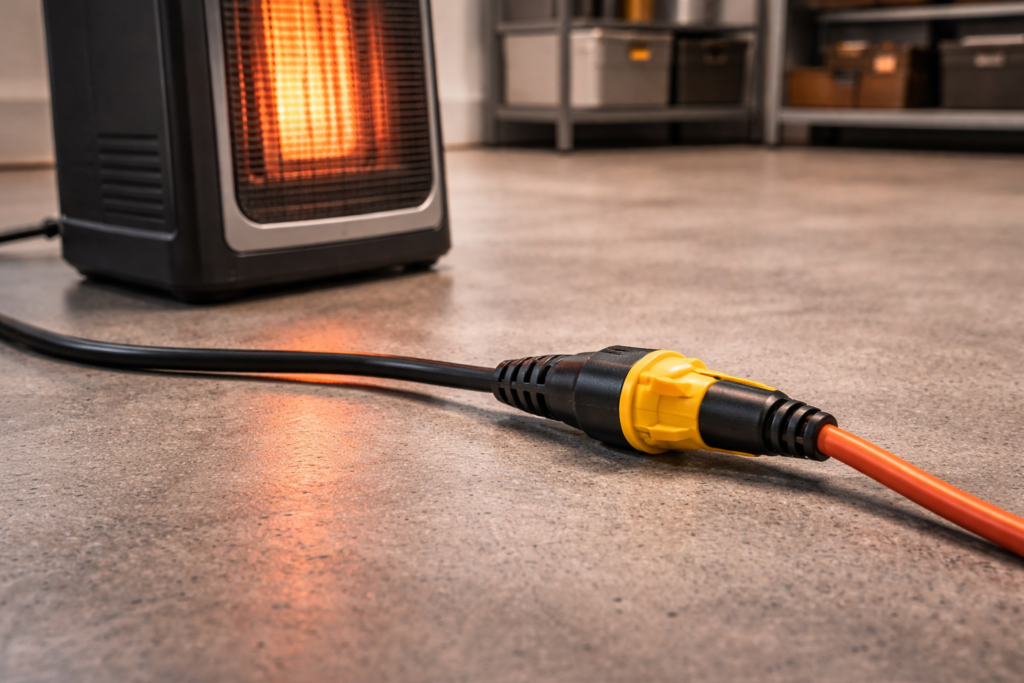
In most cases, extension cords are not recommended for electric garage heaters.
While it may seem convenient, heaters draw high electrical current for extended periods. Extension cords increase resistance, which can lead to heat buildup inside the cord itself.
For short, temporary use with a properly rated heavy-duty cord, it may be possible. But for regular garage heating, plugging directly into a wall outlet is the safer option.
Why Extension Cords Can Be Risky
Electric garage heaters often draw:
• 1,000–1,500 watts (120V models)
• 4,000+ watts (240V models)
A 1,500-watt heater pulls about 12.5 amps continuously. Many standard extension cords are not designed for sustained high loads.
Risks include:
• Overheating cords
• Melted insulation
• Voltage drop
• Fire hazard
The longer the cord, the greater the resistance and heat buildup.
When Extension Cords Are Especially Unsafe
You should never use an extension cord if:
• The heater requires 240V
• The heater exceeds 1,500 watts
• The cord is lightweight (16 or 18 gauge)
• The cord is coiled while in use
• The connection feels warm to the touch
Most 240V garage heaters are designed for hardwiring and require a dedicated circuit. If you’re unsure about circuit requirements, review Do You Need a Dedicated Circuit for a Garage Heater? before installation.
What About Heavy-Duty Extension Cords?
A heavy-gauge (12-gauge or thicker) extension cord rated for 15 amps may handle a small 120V heater temporarily.
However:
• It should be as short as possible
• It should be fully uncoiled
• It must be rated for indoor/outdoor use
• It must not run under rugs or through door gaps
Even then, it should not be considered a permanent solution.
Manufacturers often state directly in the manual: plug directly into a wall outlet.
Why Direct Wall Outlets Are Safer
Wall outlets are wired directly to the breaker panel with properly sized conductors.
This provides:
• Stable voltage
• Reduced resistance
• Lower heat buildup
• Built-in breaker protection
If your heater repeatedly trips breakers, the issue may be circuit capacity rather than the heater itself.
Understanding voltage limits helps prevent overload. See 120V vs 240V Electric Garage Heaters to determine what your garage electrical system can safely support.
What Happens If a Cord Overheats?
An overheating extension cord can:
• Soften insulation
• Damage internal wiring
• Create arcing at connections
• Ignite nearby materials
Because garage heaters often run for long periods in cold weather, sustained load is the primary concern — not just startup surge.
Safer Alternatives
Instead of using an extension cord:
• Install an outlet closer to the heater location
• Upgrade to a dedicated circuit
• Choose a heater suited to your existing wiring
If you’re unsure about proper sizing, review How Many Watts to Heat a Garage? to ensure you’re not pushing a circuit beyond safe limits.
Bottom Line
Extension cords are generally not safe for regular garage heater use.
For small 120V heaters, a short, heavy-duty cord may be used temporarily — but direct wall connection is strongly recommended.
For larger 240V heaters, extension cords should never be used.
Safe electrical setup protects your heater, your wiring, and your garage.