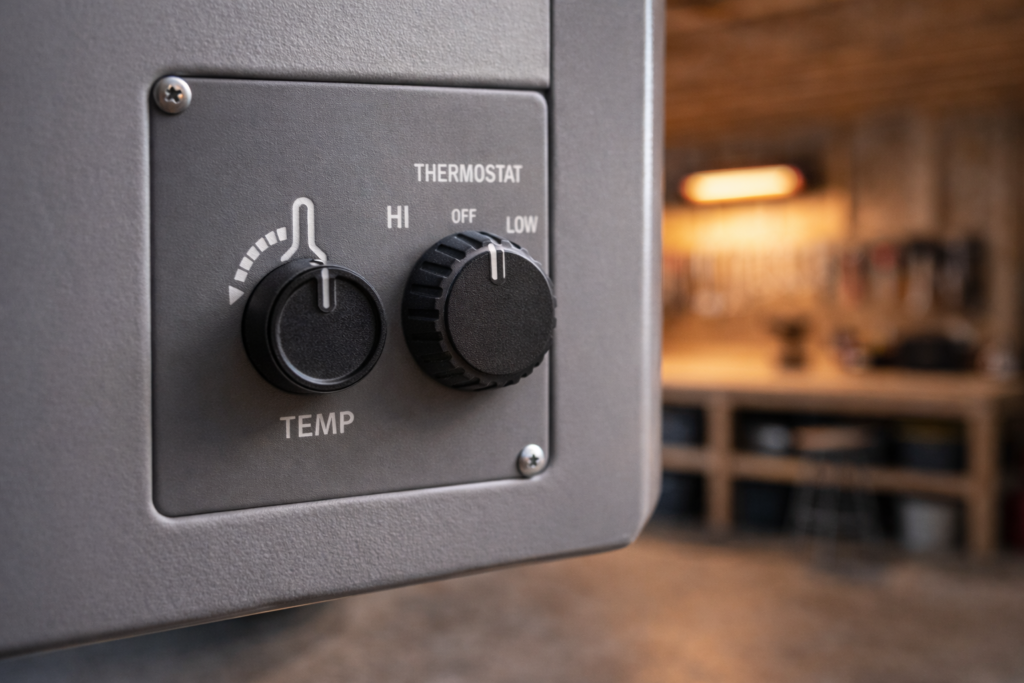
An electric garage heater with a built-in thermostat provides more consistent temperature control and improved energy efficiency.
Instead of running continuously, a thermostat allows the heater to:
• Turn off once the set temperature is reached
• Cycle back on when the temperature drops
• Maintain steady comfort
• Reduce unnecessary energy use
For most garages, a thermostat is one of the most useful features you can choose.
Why a Thermostat Matters
Without a thermostat, a heater runs at full output until manually turned off.
With a thermostat:
• The heater maintains a target temperature
• Warm-up happens automatically
• Energy use becomes more controlled
• The space feels more comfortable over time
This is especially important in garages used for long work sessions.
What Type of Thermostat Should You Look For?
Electric garage heaters typically include one of three thermostat types:
Built-In Mechanical Thermostat
• Simple dial control
• Reliable
• Common in wall-mounted and ceiling units
Digital Thermostat
• More precise temperature control
• Often includes display
• Better for consistent winter use
External Wall Thermostat (Hardwired Systems)
• Installed separately
• Offers better placement flexibility
• Common with larger 240V heaters
For whole-garage heating, wall-mounted or ceiling-mounted heaters with thermostat control are usually more effective than portable units.
If you’re comparing heater styles, see Types of Electric Garage Heaters Explained before choosing.
Thermostat and Wattage Go Together
A thermostat cannot compensate for undersized wattage.
If the heater is too small, it may:
• Run constantly
• Struggle to reach temperature
• Increase energy use
Before choosing a thermostat-equipped model, confirm your sizing with What Size Electric Heater Do I Need for My Garage?
120V vs 240V Thermostat Heaters
Both 120V and 240V heaters can include thermostats.
120V models:
• Suitable for small garages
• Usually capped at 1,500 watts
• Often portable
240V models:
• Deliver higher wattage
• Better for medium to large garages
• Typically hardwired
If you’re unsure which voltage is appropriate, review 120V vs 240V Electric Garage Heaters before selecting a heater.
Wall, Ceiling, or Portable?
Thermostat-equipped heaters are available in:
• Wall-mounted fan-forced units
• Ceiling-mounted 240V units
• Portable plug-in heaters
For full-space heating, permanently mounted models with built-in thermostats offer the most consistent performance.
Portable thermostat heaters are better suited for small spaces or occasional use.
What Makes the “Best” Thermostat Heater?
The best electric garage heater with a thermostat:
• Matches your square footage
• Has sufficient wattage
• Includes reliable temperature control
• Is properly mounted for airflow
• Works within your electrical capacity
Temperature control improves comfort — but correct sizing determines performance.
If you’re looking for models with better temperature control, this guide reviews some of the most practical options:
Electric Garage Heater Reviews
Bottom Line
An electric heater with a thermostat:
• Improves efficiency
• Maintains steady warmth
• Reduces manual adjustments
• Lowers the risk of overheating
For most garages, a properly sized 240V wall- or ceiling-mounted heater with built-in thermostat control provides the best balance of comfort and performance.