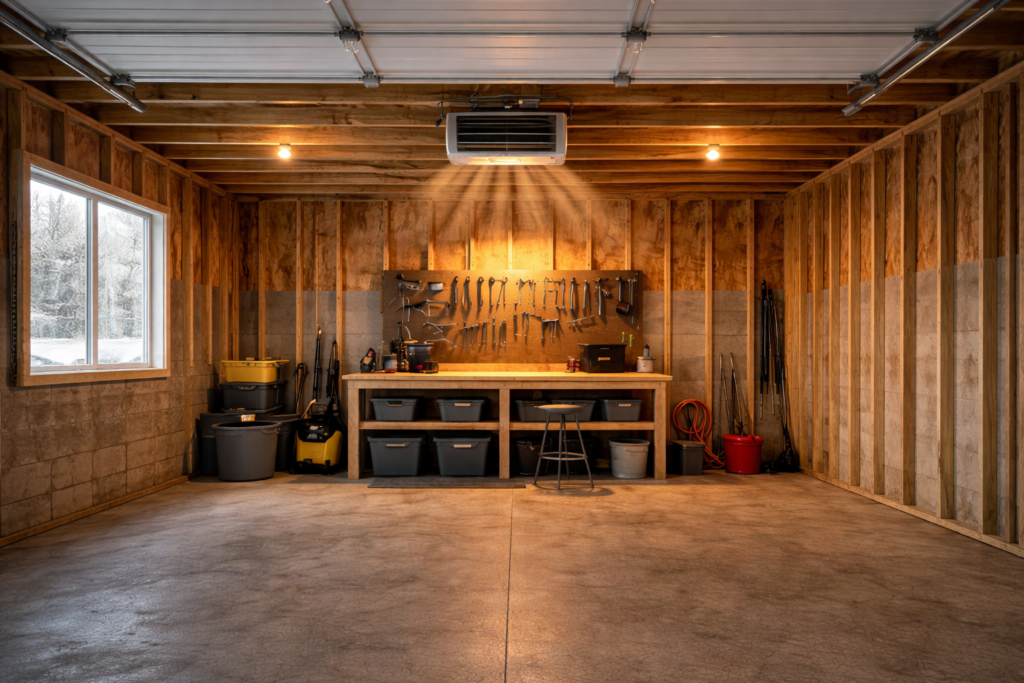
The best heater for an uninsulated garage is one with higher wattage output and strong air circulation, typically a 240V wall-mounted or ceiling-mounted unit.
Because uninsulated garages lose heat quickly, small plug-in heaters are rarely sufficient for full-space comfort.
Choosing the right heater means accounting for heat loss, cold surfaces, and longer run times.
Why Uninsulated Garages Are Harder to Heat
Without insulation, heat escapes through:
• Garage doors
• Concrete walls
• Open ceiling rafters
• Air gaps around frames
Cold concrete and metal surfaces absorb heat before the air temperature rises. This increases warm-up time and energy use.
Before selecting a heater, calculate your true wattage requirement using How Many Watts to Heat a Garage?
How Much Wattage Do You Need?
The standard 10 watts per square foot rule assumes insulation.
For uninsulated garages, a better estimate is:
• 12–15 watts per square foot
Example:
400 sq ft insulated → ~4,000 watts
400 sq ft uninsulated → 5,000–6,000 watts
Higher output helps offset heat loss.
Best Heater Types for Uninsulated Garages
1. 240V Fan-Forced Wall or Ceiling Heater (4,000–7,500W)
Best overall option for:
• Full-garage heating
• Consistent winter use
• Medium to large garages
Fan-forced units circulate warm air across the entire space, helping overcome heat loss.
2. Infrared Heater (For Drafty Spaces)
Best for:
• Spot heating
• Workbench areas
• Garages with air leaks
Infrared heaters warm objects directly, which can feel more effective when air temperatures fluctuate.
However, they do not heat the entire air mass evenly.
3. Dual Heater Setup (Large or Very Cold Garages)
In larger uninsulated garages, some homeowners use:
• One primary 240V heater
• One supplemental infrared unit
This helps improve distribution and reduce cold corners.
Is 120V Enough?
In most cases, no.
Standard 120V heaters (1,500 watts) are usually too small for uninsulated garages larger than 200–250 sq ft.
They may work for:
• Very small spaces
• Mild climates
• Short work sessions
For full winter heating, 240V is typically required.
If you’re comparing electrical setups, see 120V vs 240V Electric Garage Heaters before choosing.
Electrical Considerations
Higher wattage means:
• 240V power
• Dedicated circuit
• Proper breaker sizing
Before installation, review Do You Need a Dedicated Circuit for a Garage Heater? to confirm your panel can support the load.
Should You Insulate Instead?
In many cases, adding insulation provides better long-term value than simply increasing heater size.
Even basic improvements like:
• Insulating the garage door
• Sealing gaps
• Adding ceiling insulation
can reduce required wattage and lower operating costs.
If insulation upgrades are not possible, plan for higher wattage and longer run times.
What Makes a Heater “Best” for an Uninsulated Garage?
The best heater for an uninsulated garage:
• Delivers higher-than-standard wattage
• Operates on 240V
• Includes strong fan circulation
• Is properly mounted for airflow
• Matches your electrical capacity
Undersizing leads to constant running and poor comfort.
Proper sizing improves performance even without insulation.
Uninsulated garages often require more powerful heating solutions. This guide covers the best options for colder environments:
Best Electric Garage Heater for Cold Climates
Bottom Line
For uninsulated garages:
• Increase wattage above standard recommendations
• Choose a 240V hardwired heater
• Expect longer warm-up times
• Consider insulation upgrades when possible
Electric heating can work effectively — but planning for heat loss is essential.