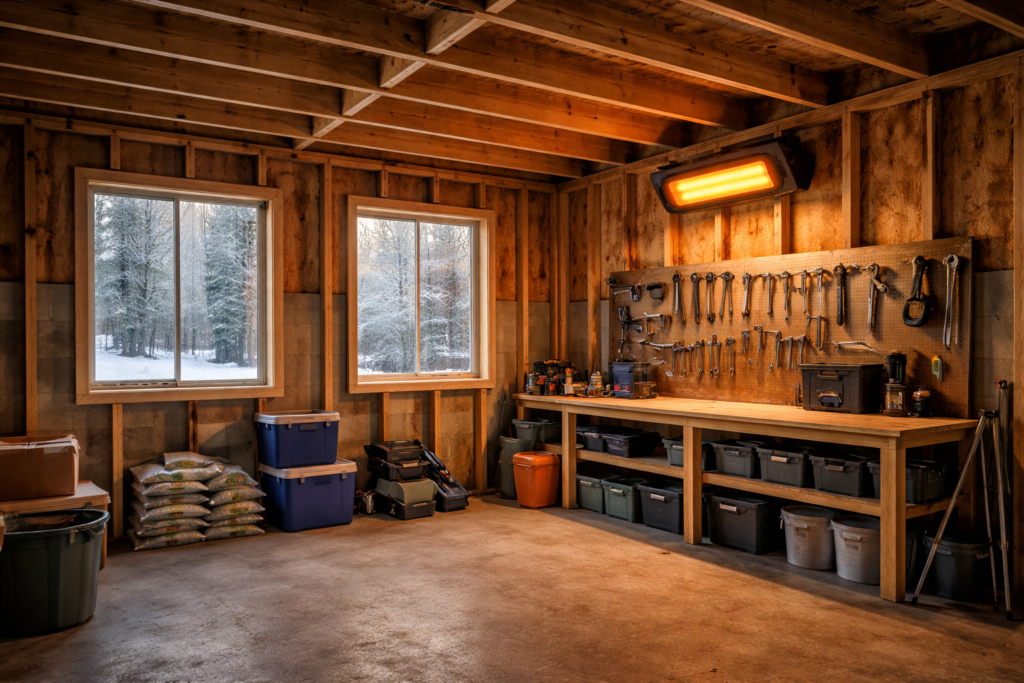
Yes, an electric heater can warm a detached garage — but the results depend heavily on insulation, garage size, and available electrical capacity.
Detached garages often lose heat faster than attached garages because they are exposed on all sides. That means heater sizing and placement matter even more.
What Makes Detached Garages Different?
Unlike attached garages, detached structures typically have:
• More exterior wall exposure
• Greater air leakage
• No shared warmth from the home
• Colder slab floors
Because of this, they often require more wattage to reach and maintain comfortable temperatures.
Before choosing a unit, calculate your wattage needs using How Many Watts to Heat a Garage?
Is a 120V Heater Enough?
In most detached garages, small 120V heaters (1,500 watts) are only suitable for:
• Very small one-car garages
• Mild winter climates
• Spot heating near a workbench
For medium to large detached garages, a 240V heater is usually more effective.
If you’re unsure about electrical capacity, review 120V vs 240V Electric Garage Heaters before deciding.
Insulation Makes the Biggest Difference
An insulated detached garage can be heated effectively with the correct wattage.
An uninsulated detached garage will:
• Take longer to warm
• Lose heat quickly
• Require higher output
• Increase operating costs
Even simple improvements like sealing door gaps or insulating the garage door panels can noticeably improve performance.
If your garage is uninsulated, it helps to understand what to expect before investing in a larger heater.
Electrical Supply Considerations
Detached garages sometimes have limited electrical service.
Before installing a high-wattage heater, confirm:
• Panel capacity
• Available breaker space
• Wire gauge
• Distance from main house panel
Larger 240V heaters often require a dedicated circuit.
If you’re planning permanent installation, review Do You Need a Dedicated Circuit for a Garage Heater? before proceeding.
Placement Matters More in Detached Garages
Because detached garages cool from all sides, strategic placement is important.
Heaters perform best when:
• Mounted off the floor
• Positioned toward the center
• Angled to circulate warm air across the workspace
Proper airflow reduces cold pockets near doors and corners.
Will It Stay Warm All Winter?
That depends on:
• Climate
• Insulation quality
• Heater size
• How often the garage door is opened
If you open the garage door frequently in cold weather, heat loss can be significant.
Electric heaters are effective for maintaining working comfort — but they are not designed to turn a detached garage into a fully climate-controlled living space without insulation upgrades.
Bottom Line
An electric heater can warm a detached garage if:
• The heater is properly sized
• Electrical capacity supports the load
• Insulation is adequate
• Placement allows good air circulation
Detached garages often require more wattage than attached ones, but with correct planning, electric heating can provide reliable and safe warmth.
Detached garages can be harder to heat in winter. This guide explains which heaters are best suited for colder environments:
Best Electric Garage Heater for Cold Climates