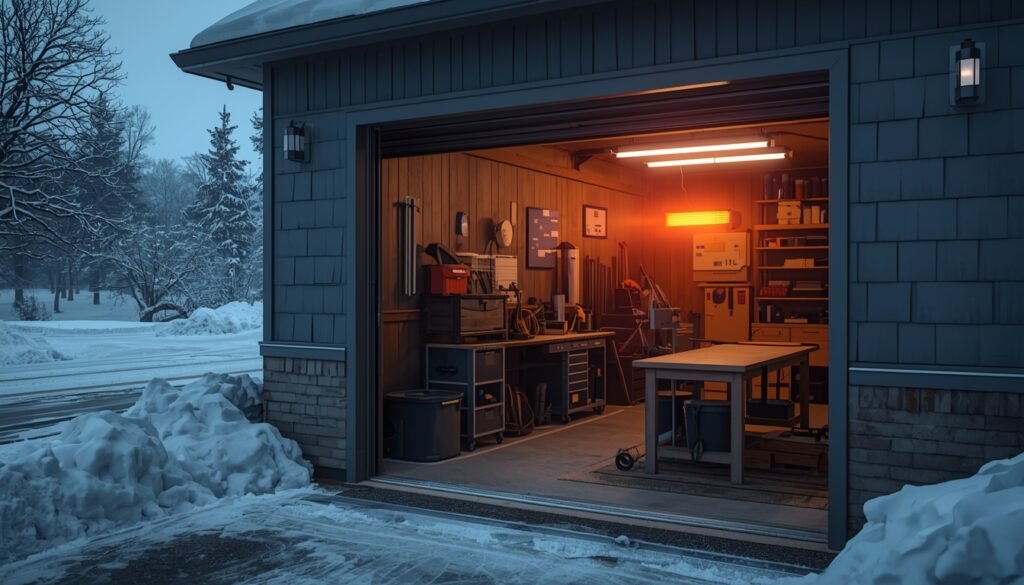
Heating a garage in winter can cost anywhere from modest to surprisingly high, depending on heater wattage, electricity rates, insulation, and how cold the local climate gets. In a place like Wisconsin, where winter temperatures can stay low for long periods, the real cost often comes down to how long the heater has to run each day and whether the garage holds heat well. If you are comparing running costs across different setups, it also helps to understand how much it costs to run an electric garage heater before estimating winter use in a colder climate.
Use the calculator below to estimate your exact running cost based on your heater size and electricity rate.
Why winter garage heating cost climbs faster in cold climates
A garage heater in winter does not just battle square footage. It also battles heat loss. In cold-climate states such as Wisconsin, the outside temperature can stay far below what most homeowners want inside the garage, especially in the morning or at night. That constant temperature gap means the heater has to work harder and stay on longer than it would in a milder location. Even if two garages use the same heater, the one in the colder climate usually costs more to heat because the heater cycles less and runs closer to full output for longer stretches.
That is why winter heating cost often surprises people. A heater that seems affordable on paper based on hourly wattage can become expensive when used day after day through freezing weather. Detached garages, uninsulated walls, leaky doors, and tall ceilings all make the problem worse. The garage may never fully stabilize at the thermostat setting, so the heater keeps drawing power instead of settling into shorter on-off cycles. In practical terms, cold weather does not just add a little to the bill. It can completely change how often the heater runs and how much value you get from each watt of heat.
Cold climates can significantly increase runtime, so it helps to estimate your exact usage with this electric garage heater cost calculator.
What a realistic winter running cost might look like
A simple wattage calculation gives the maximum cost at full output. A 1500W heater uses 1.5 kWh per hour, a 5000W heater uses 5 kWh per hour, and a 7500W heater uses 7.5 kWh per hour. At an electricity rate of $0.15 per kWh, that works out to about $0.23, $0.75, and $1.13 per hour. On paper, those numbers can seem manageable. The issue in winter is that the heater may need to run for many hours each day, especially if the garage starts cold and loses heat quickly.
For example, a 5000W heater used for 6 hours a day at full output would cost about $4.50 per day and roughly $135 per month. A 7500W heater used under the same conditions would cost about $6.75 per day or just over $200 per month. Those numbers can rise even higher if electricity rates are above average or if the heater runs longer due to poor insulation. A smaller 1500W heater costs far less per hour, but in a Wisconsin-style winter it may not heat the space effectively enough to be useful except for spot heating. That is why the cheapest heater to run is not always the most practical heater for winter garage use.
What affects winter heating cost the most
- Insulation level matters more than many homeowners expect. Insulated walls and ceilings reduce heat loss and let the heater cycle off more often.
- Air leaks around the garage door, side door, windows, and framing can push a heater into longer runtimes even if the garage is not especially large.
- Attached garages are often easier and cheaper to heat than detached garages because they benefit from some shared warmth and less wind exposure.
- Ceiling height changes the cost because more air volume takes more energy to warm, especially when the warmest air rises away from the work area.
- Thermostat setting matters. Holding a garage at a modest workable temperature usually costs much less than trying to make it feel like a finished room.
- How often the main garage door opens in winter can quickly undo stored heat and force the heater back into full-power operation.
Why a properly sized heater often costs less in practice
Many people assume the smaller heater is always the cheaper option, but that is not always true in winter. A heater that is too small for the space may run nearly nonstop and still fail to maintain a comfortable temperature. In that situation, you are paying for long runtime without getting the result you want. A properly sized 5000W or 7500W heater may look expensive per hour, but it can warm the garage faster and then cycle more normally once the space reaches temperature. That can make it the better real-world value in a cold climate.
This is especially relevant in Wisconsin-style winter conditions, where a heater often has to recover from a very cold starting temperature. If the garage sits near outdoor temperature overnight, a weak heater may spend hours trying to catch up. A stronger heater may draw more power while actively heating, but it can do the job more effectively. That does not mean bigger is always better. An oversized heater can still cost more than necessary if the space is small and reasonably insulated. The goal is not to choose the highest wattage. The goal is to choose enough output to heat the garage efficiently without forcing the unit into constant struggle.
Practical ways to keep winter garage heating cost under control
- Seal obvious drafts first. Weatherstripping and gap sealing are often cheaper than paying for wasted heat all winter.
- Insulate the garage door if the rest of the garage is already enclosed and insulated. That can make a noticeable difference in runtime.
- Use the heater only when needed if the garage is a workshop rather than an all-day living space.
- Set a realistic target temperature. Even a few degrees lower can reduce runtime over a full winter month.
- Warm the area you use most instead of trying to make the whole garage feel like indoor living space if the garage is large or poorly insulated.
- Match heater size to the garage instead of buying the smallest unit just because the hourly running cost looks lower.
How to estimate winter cost more accurately for your own garage
The best way to estimate winter heating cost is to calculate both a maximum cost and a likely real-use cost. Start with the simple formula based on wattage, electricity rate, and hours used. That gives you the full-output number. Then adjust for likely runtime once the garage warms up. In a reasonably insulated garage, a heater may average well below continuous operation after warm-up. In a drafty detached garage during a Wisconsin cold spell, the heater may stay much closer to full output. Thinking in both numbers gives you a more useful estimate than relying on a single headline figure.
It also helps to think about how you actually use the garage. A person who heats the space for two hours on weekends has a very different cost profile from someone trying to keep the garage workable every evening through winter. Real heating cost is not just about the weather outside. It is about frequency of use, comfort expectations, insulation quality, and whether the heater is genuinely suited to the space. If you judge winter cost through that practical lens, it becomes much easier to choose the right heater and avoid unrealistic expectations about what your monthly bill will look like.