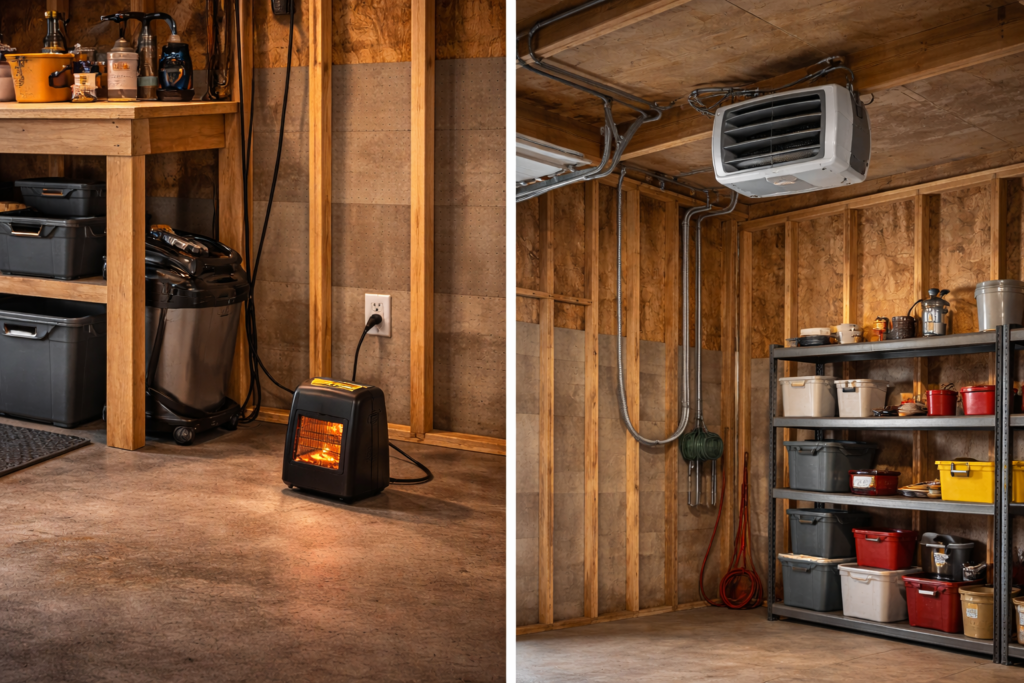
When choosing an electric garage heater, one key decision is whether to install a hardwired unit or use a plug-in model.
Both can heat a garage effectively, but they differ in power capacity, installation requirements, and long-term flexibility.
The right option depends on:
• Garage size
• Electrical capacity
• Desired heat output
• Whether the installation is temporary or permanent
What Is a Plug-In Garage Heater?
A plug-in heater connects directly to a standard outlet, usually 120V.
Most plug-in units:
• Deliver up to 1,500 watts
• Work on standard 15-amp circuits
• Are portable or wall-mountable
• Require no electrical modifications
These heaters are convenient and simple to install — just plug them in and turn them on.
However, their heating capacity is limited.
If you’re unsure whether 1,500 watts is enough, review How Many Watts to Heat a Garage? before purchasing.
What Is a Hardwired Garage Heater?
A hardwired heater connects directly into your electrical system.
These units:
• Often operate on 240V
• Deliver 4,000–7,500+ watts
• Require a dedicated circuit
• Are permanently mounted
Hardwired heaters are typically installed on the wall or ceiling and provide enough output to heat medium to large garages.
If you’re planning this type of installation, see Do You Need a Dedicated Circuit for a Garage Heater? before proceeding.
Power Output Comparison
Plug-in heaters:
• Limited to 120V
• Usually capped at 1,500 watts
• Suitable for small garages or spot heating
Hardwired heaters:
• Use 240V in most cases
• Provide significantly higher output
• Heat larger spaces more effectively
Voltage does not determine cost — wattage does. To understand the difference in capacity, review 120V vs 240V Electric Garage Heaters.
Installation Differences
Plug-In:
• No electrician required
• Portable or easy to relocate
• Ideal for renters or short-term use
Hardwired:
• Requires electrical work
• Permanent installation
• Often ceiling or wall mounted
• Must follow local electrical code
Hardwired systems involve higher upfront effort but deliver stronger performance.
For smaller spaces, a simpler plug-in heater may be enough. This guide looks at the most suitable options for small garages:
Best Electric Garage Heater for Small Garages
Safety Considerations
Plug-in heaters must:
• Be connected directly to a wall outlet
• Avoid extension cords
• Not overload shared circuits
Hardwired heaters:
• Reduce risk of outlet overheating
• Operate on properly sized wiring
• Handle sustained high wattage safely
For larger garages, hardwired systems are often the safer long-term solution.
Which One Should You Choose?
Choose plug-in if:
• You have a small garage
• You need occasional heat
• You want simple setup
• Electrical upgrades are not possible
Choose hardwired if:
• You have a two-car or larger garage
• You need consistent winter heating
• You require 4,000+ watts
• You want a permanent solution
Matching heater type to your garage size and electrical capacity ensures better performance and fewer breaker issues.
After deciding on installation type, the next step is choosing a suitable model. This guide compares several practical options:
Electric Garage Heater Reviews
Bottom Line
Plug-in garage heaters are convenient and easy but limited in output.
Hardwired garage heaters require more installation effort but provide significantly more heating power.
For small spaces and light use, plug-in models can work well.
For larger garages and colder climates, hardwired systems are typically more effective.