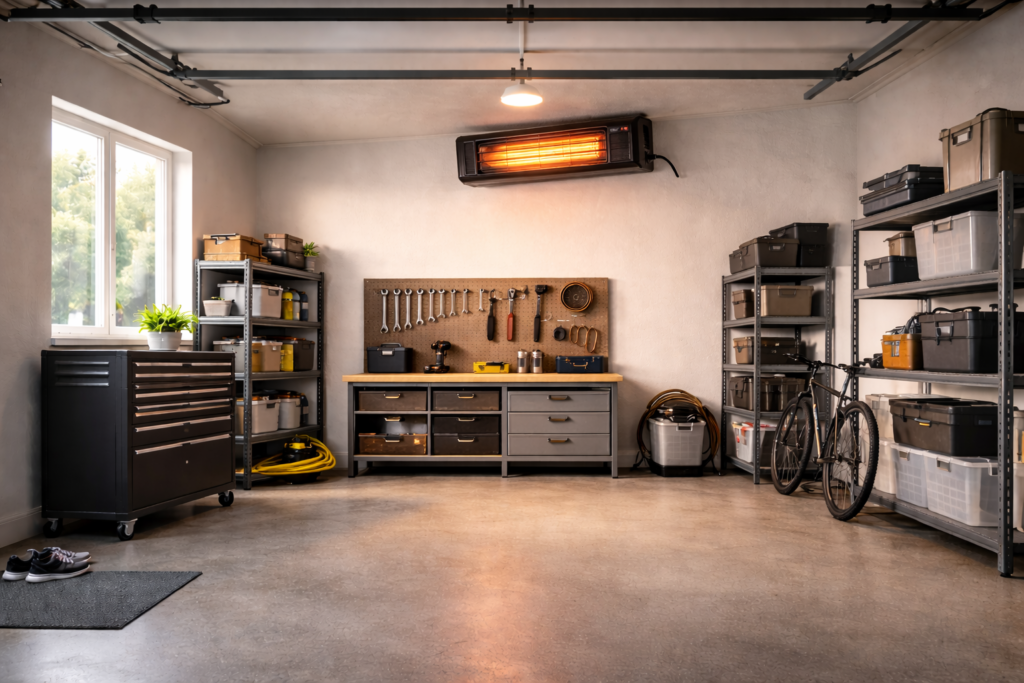
The placement of an electric garage heater affects how evenly your space warms up, how efficiently it runs, and how safe the installation is.
The best location depends on:
• Heater type (wall-mounted, ceiling-mounted, portable)
• Garage size and layout
• Insulation level
• Clearance from flammable materials
Correct placement improves airflow, reduces cold spots, and prevents overheating nearby objects.
General Placement Guidelines
For most garages, heaters perform best when:
• Mounted off the floor
• Positioned along an exterior wall
• Installed away from clutter
• Directed toward the center of the room
Heat naturally rises, so mounting position matters. Wall and ceiling units distribute heat more evenly than floor units in larger garages.
If you’re still deciding between heater styles, see Types of Electric Garage Heaters Explained before planning placement.
Wall-Mounted Heater Placement
Wall-mounted heaters are typically installed:
• 6–8 feet above the floor
• On an exterior wall
• Near the coldest area of the garage
Common cold zones include:
• Above garage doors
• Along uninsulated walls
• Near draft-prone corners
Angling the heater slightly downward helps push warm air across the floor before it rises.
Avoid placing wall units directly above:
• Gas cans
• Workbenches with sawdust buildup
• Storage shelves with cardboard boxes
Always follow manufacturer clearance requirements.
Ceiling-Mounted Heater Placement
Ceiling-mounted heaters work well in:
• Two-car garages
• Workshops with open floor space
• Garages with high ceilings
Ideal placement is:
• Near the center of the garage
• Slightly toward the garage door
• Aimed diagonally across the space
Because warm air rises, ceiling heaters should include a fan-forced design to circulate air downward.
If your ceiling is higher than 8 feet, placement and wattage both matter. Review How Many Watts to Heat a Garage? to ensure your heater can handle the air volume.
Portable Heater Placement
Portable heaters are best for:
• Spot heating
• Small garages
• Workbench areas
Place portable units:
• On flat, non-flammable surfaces
• Away from foot traffic
• At least several feet from walls and objects
Avoid placing them:
• Directly under shelves
• Near stored fuel
• On uneven surfaces
Portable heaters should not be left running unattended.
Placement Near the Garage Door
Garage doors are often the biggest source of heat loss.
Installing a heater:
• Opposite the garage door can push warm air toward it
• Near the door can help counteract drafts
The best solution depends on airflow direction and insulation quality.
Clearance and Safety Considerations
Regardless of heater type:
• Maintain required clearance on all sides
• Keep flammable materials well away
• Avoid blocking airflow
• Do not mount directly under low shelving
Improper placement can:
• Create hot spots
• Reduce efficiency
• Increase fire risk
If you’re unsure which heater type fits your layout, start with How to Choose an Electric Garage Heater before finalizing placement.
Bottom Line
The best place to install a garage heater is:
• Elevated off the floor
• Clear of clutter
• Positioned to circulate air across the entire space
• Installed according to manufacturer clearance guidelines
Placement affects comfort, efficiency, and safety just as much as heater size or wattage.
Incorrect placement is a common cause of poor performance—see electric garage heater not heating enough for more detail