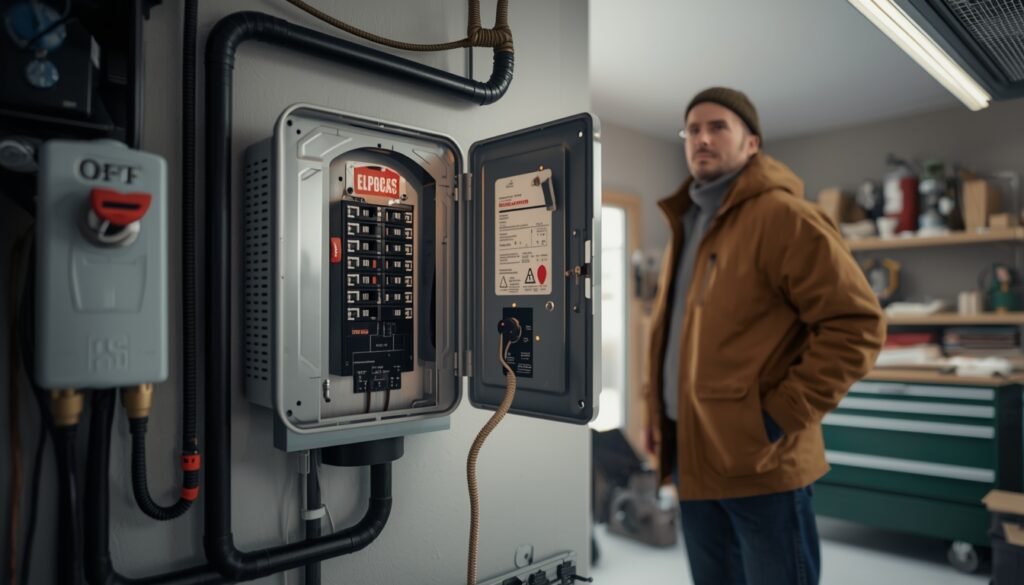
In most homes, an electric garage heater should run without interruption once it’s turned on. A common issue is when the heater suddenly shuts off and the breaker trips, cutting power to the garage. Many people find this frustrating, especially when it happens repeatedly and without warning.
This typically happens when the electrical demand of the heater exceeds what the circuit can safely handle. While it may seem like a fault with the heater, the problem is usually related to the electrical setup rather than the unit itself. If you are unsure whether your heater is matched correctly to your system, it can help to review a full guide to choosing an electric garage heater to understand how power requirements vary between models.
Signs Your Garage Heater Is Tripping the Breaker
- The breaker shuts off shortly after turning the heater on
- The heater runs briefly, then loses power suddenly
- The breaker trips more often when other tools or appliances are in use
- You need to reset the breaker repeatedly to keep the heater running
- The heater works on low settings but trips on higher settings
These signs usually indicate that the circuit is being overloaded or that the heater is drawing more power than the system can safely supply.
What Causes a Breaker to Trip
In most homes, circuit breakers are designed to protect wiring from overheating. A common issue is assuming the breaker is faulty, when in reality it is doing exactly what it is supposed to do.
Many people find that breakers trip when too much electrical current flows through a circuit. This typically happens when the combined load of all connected devices exceeds the circuit’s capacity.
Garage heaters are particularly demanding because they draw a high level of power, especially when first switched on. This makes them more likely to trigger a breaker if the setup is not correct.
The Most Common Causes and Fixes
The Heater Is Too Powerful for the Circuit
This is one of the most common reasons for breaker trips. In most homes, garage heaters require a significant amount of power, particularly larger or hardwired units.
A common issue is plugging a high-wattage heater into a standard outlet that cannot support the load. Many people find that the breaker trips almost immediately when the heater starts.
This typically happens because the circuit is rated for less current than the heater is drawing. The practical fix is to check the heater’s wattage and compare it to the circuit capacity. In many cases, installing a dedicated circuit resolves the issue.
Too Many Devices on the Same Circuit
In most homes, garage outlets are shared between multiple devices. A common issue is running a heater alongside tools, lighting, or other equipment.
Many people find that the heater works fine on its own, but trips the breaker when other devices are turned on.
This typically happens because the total electrical load becomes too high. Reducing the number of devices on the circuit or moving the heater to a separate circuit usually fixes the problem.
Using an Extension Cord
Extension cords are often used for convenience, but they can cause serious issues with high-powered heaters.
A common issue is that extension cords are not rated to handle the load of a garage heater. Many people find that this leads to overheating, reduced performance, or breaker trips.
This typically happens when the cord restricts power flow or adds resistance. Plugging the heater directly into a properly rated outlet is always the safer option.
Incorrect Voltage Setup
Electric garage heaters are designed to run on specific voltage levels, usually 120V or 240V.
A common issue is using a heater with the wrong electrical setup. Many people find that the heater either underperforms or trips the breaker when the voltage is not correct.
This typically happens when the circuit does not match the heater’s requirements. Ensuring the correct voltage is critical for safe operation.
Faulty Heater or Internal Problem
While less common, the heater itself can sometimes be the cause.
A common issue is internal damage or worn components. Many people find that this leads to unpredictable operation or repeated breaker trips.
This typically happens when heating elements fail or wiring inside the unit becomes damaged. In these cases, the heater may need repair or replacement.
Quick Checks You Can Do Right Away
- Check the heater’s wattage and compare it to your circuit capacity
- Plug the heater directly into the outlet instead of using an extension cord
- Turn off other devices on the same circuit and test the heater again
- Confirm the voltage matches the heater’s requirements
- Inspect the outlet and plug for signs of heat or damage
These simple checks often identify the cause of the problem without needing major changes.
Preventing Breaker Trips in the Future
In most homes, preventing breaker trips comes down to using the heater within the limits of the electrical system.
A common issue is expecting a standard household circuit to handle high-powered equipment. Many people find that once the heater is set up correctly, breaker trips stop completely.
This typically involves making sure the heater is on a circuit that can handle its load and avoiding unnecessary strain on the system.
When an Electrical Upgrade Is Needed
In some cases, the existing electrical system is simply not suitable for the heater being used.
A common issue is older wiring or circuits that were not designed for high-demand devices. Many people find that upgrading the circuit allows the heater to run safely and consistently.
This typically involves installing a dedicated circuit or increasing circuit capacity. While it requires some effort, it often provides the most reliable long-term solution.
Key Causes to Keep in Mind
- High-wattage heater on a low-capacity circuit
- Multiple devices sharing the same circuit
- Use of extension cords not rated for heavy loads
- Incorrect voltage setup
- Faulty heater components
Understanding these causes helps you quickly identify why the breaker is tripping and what needs to be corrected.
Final Thoughts
In most homes, a garage heater that trips the breaker is not defective—it is a sign that the electrical system is being overloaded. A common issue is a mismatch between heater power and circuit capacity.
Many people find that once the heater is properly matched to the circuit, the problem disappears. This typically involves reducing the load, improving connections, or upgrading the electrical setup.
By focusing on safe power use and proper setup, you can prevent breaker trips and keep your garage heater running reliably.